Comprehensive Guide to Industrial Process Control Software


Understanding Industrial Process Control Software
Industrial process control software is crucial for optimizing and managing complex manufacturing processes. It provides the tools needed to monitor, control, and automate industrial operations, enhancing efficiency and productivity. These systems are vital in industries such as oil and gas, pharmaceuticals, and food processing, where precision and reliability are paramount.
Key Features and Benefits
The primary features of industrial process control software include real-time monitoring, data collection, and process automation. Real-time monitoring allows operators to track operations as they happen, enabling quick responses to any issues. By collecting data from various sensors and equipment, the software provides insights into performance metrics and trends. Automation is another significant advantage, reducing human error and increasing production speed.
Moreover, these systems enhance decision-making by providing actionable insights through advanced analytics. By leveraging machine learning algorithms, the software can predict equipment failures and suggest maintenance schedules, thereby minimizing downtime.
Types of Industrial Process Control Software
There are several types of industrial process control software, each designed to meet specific needs. Supervisory Control and Data Acquisition (SCADA) systems are widely used for large-scale operations, providing centralized control and monitoring. Distributed Control Systems (DCS) are ideal for continuous processes, offering scalability and robust control capabilities.
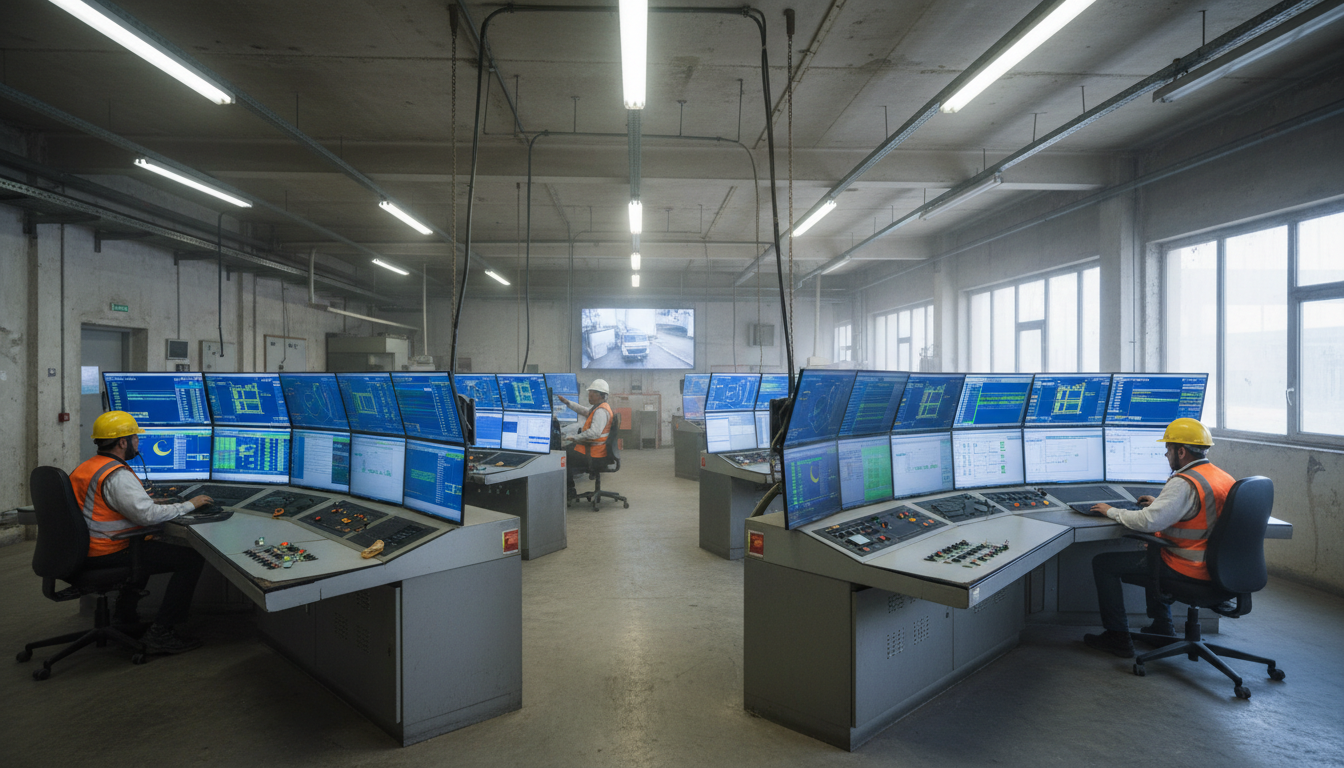
Programmable Logic Controllers (PLC) are another common type, known for their reliability and flexibility in automating industrial processes. Hybrid systems combine features from both SCADA and DCS, offering a comprehensive solution for complex operations.
Implementation Challenges
Implementing industrial process control software can present challenges, including integration with existing systems and training personnel to use new technologies. It is essential to conduct a thorough assessment of the current infrastructure and plan for seamless integration to avoid disruptions.
Training is also a critical component. Operators and technicians need to be well-versed in the new system to maximize its potential. Investing in comprehensive training programs ensures that the transition is smooth and that the workforce is comfortable with the technology.

Future Trends in Process Control Software
The future of industrial process control software is promising, with advancements in artificial intelligence and the Internet of Things (IoT) driving innovation. AI-enabled systems are becoming more prevalent, offering predictive analytics and self-optimizing capabilities. IoT integration allows for more connected devices, leading to improved data accuracy and operational efficiency.
As these technologies continue to evolve, we can expect more intelligent and autonomous systems that not only control processes but also enhance strategic decision-making. Industries that adopt these innovations will likely see significant improvements in productivity and cost efficiency.